

What Survival Kit Do You Actually Need Quiz
Most people either over-buy survival gear they'll never use or under-prepare for scenarios that are genuinely likely. The right kit depends on where you live, your household size, and the most realistic threats you face. A suburban family in tornado country needs something completely different from a solo hiker in the Rockies or a commuter building a vehicle kit. Answer 5 questions and get a specific, actionable recommendation.
Table of Contents
- Our Top Picks
- What's your most realistic emergency scenario?
- How many people are you preparing for?
- How long do you need to be self-sufficient?
- Do you have any existing prep gear?
- What's your budget for building this kit?
- 🎒 Your Kit: Bug-Out Bag (72-Hour Evacuation Pack)
- 🏠 Your Kit: Home Shelter-In-Place Prep
- 🚗 Your Kit: Vehicle Emergency Kit
- 🏔️ Your Kit: Backcountry / Outdoors Survival Kit
- Frequently Asked Questions
Our Top Picks
Affiliate disclosure: if you buy through these links, we may earn a commission at no extra cost to you.

What's your most realistic emergency scenario?
How many people are you preparing for?
How long do you need to be self-sufficient?
Do you have any existing prep gear?
What's your budget for building this kit?
🎒 Your Kit: Bug-Out Bag (72-Hour Evacuation Pack)
A bug-out bag is a pre-packed bag you can grab in under 2 minutes and sustain yourself for 72 hours while getting to safety. FEMA recommends every household have one. The key is keeping it lightweight enough to actually carry (under 25 lbs for most adults), organized so you can find anything in the dark, and stocked with items that cover the survival priorities in order: shelter, water, fire, food, navigation, communication, first aid.
- 💧 Water: 1L Nalgene + Sawyer Squeeze filter + 4x water purification tablets
- 🍽️ Food: 6–9 Mountain House or Backpacker's Pantry pouches (just-add-water, 5-year shelf life)
- 🏕️ Shelter: Emergency bivy (SOL Escape Bivy) + 550 paracord 50 ft
- 🔦 Light/fire: Streamlight ProTac headlamp + Bic lighters x3 + fire starter
- 🩹 First aid: Adventure Medical Kits Ultralight .7 or IFAK with tourniquet
- 📡 Communication: Midland XT511 hand-crank emergency radio
Water Filter: Sawyer Squeeze SQBF01 ($35) — The Standard
The Sawyer Squeeze is the most versatile survival water filter available — 0.1 micron filtration removes 99.9999% of bacteria and protozoa, weighs 3 oz, and is rated for 100,000 gallons (effectively lifetime use). Squeeze water through the filter pouch directly into your bottle or attach inline to a hydration bladder. It also backflushes in 30 seconds to restore flow rate. For a bug-out bag, the Sawyer Squeeze is the right water solution — it handles streams, puddles, and questionable municipal water. Pair with iodine tablets as a chemical backup for virus-contaminated water (the Sawyer doesn't filter viruses).
Shop Sawyer Squeeze Filter →Freeze-Dried Food: Mountain House Classic Bucket ($90) or Individual Pouches ($10–$12 each)
Mountain House is the gold standard for emergency freeze-dried food — 30-year shelf life, just-add-boiling-water preparation, and flavor/texture that's genuinely good enough to eat under stress. The Classic Bucket ($90) provides 12 servings across 6 pouches — enough for 3 days of one meal per person for two people. Individual pouches are the flexible option: Beef Stew, Chicken and Mashed Potatoes, and Chili Mac are the most calorie-dense. Store in your BOB in a waterproof drybag insert. Rotate every 5 years even though the shelf life is much longer — calloric density drops over time.
Shop Mountain House Freeze-Dried Food →🏠 Your Kit: Home Shelter-In-Place Prep
Shelter-in-place scenarios — extended power outages, winter storms, grid disruptions — are statistically far more common than evacuation events. FEMA recommends 2 weeks of food and water for household members. The priority order for home prep: water storage (most people have 0), food storage, power/light, communications, and first aid. Water is always the gap.
- 💧 Water: WaterBOB 100-gallon bathtub bladder + 5-gallon stackable water containers
- 🍽️ Food: 2-week supply — canned goods + Mountain House buckets + grains in sealed buckets
- ⚡ Power: Jackery Explorer 1000 or EcoFlow Delta — enough for lights, phone charging, CPAP
- 🔦 Light: Goal Zero Lighthouse 600 lantern + headlamps for each person
- 🍳 Cooking: Camp Chef Butane stove + 8 butane canisters (never cook indoors with propane)
- 📡 Communications: Midland ER310 emergency hand-crank radio (NOAA weather + AM/FM)
Water Storage: WaterBOB Emergency Bathtub Bladder ($30) + WaterBrick Stackable Containers ($25/4-pack)
The WaterBOB is the fastest way to store 100 gallons of clean tap water when a storm or disaster is inbound — a food-grade plastic bladder that fits a standard bathtub, fills in 20 minutes, and keeps water fresh for up to 16 weeks. It's the smart first step: fill it when a storm warning is issued, before water pressure or quality becomes an issue. For longer-term storage, WaterBrick 3.5-gallon stackable containers ($25/4-pack) are the most space-efficient solution — they stack like Lego bricks, fit in closets or under beds, and the HDPE food-grade plastic is rated for long-term water storage. Aim for 14–28 days of supply.
Shop WaterBOB Bathtub Bladder →Portable Power: Jackery Explorer 1000 ($799) or EcoFlow RIVER 2 ($249)
The Jackery Explorer 1000 provides 1,002 Wh of capacity — enough to run a CPAP machine for 3+ nights, charge all phones and tablets for a week, power LED lights continuously, and run a small fan. It recharges from AC, car outlet, or solar panels (200W solar input). The EcoFlow RIVER 2 ($249) is the accessible starting point — 256 Wh, charges from 0–100% in 60 minutes via AC (fastest charging in its class), powers small appliances and devices for 2–3 days. For most families, the RIVER 2 handles the critical needs (phone, lights, medical devices) at a fraction of the Jackery price.
Shop EcoFlow RIVER 2 Power Station →🚗 Your Kit: Vehicle Emergency Kit
A vehicle emergency kit lives in your trunk and addresses the scenarios most likely to actually happen to you: winter breakdown, roadside flat, minor accident, or being stranded in bad weather. It doesn't need to be a survival epic — it needs to handle 6–24 hours of roadside waiting, get you through a minor mechanical issue, and cover basic first aid and signaling.
- 🔋 Jump starter: Noco Boost Plus GB40 — jump starts without another car
- 🩹 First aid: Surviveware Large First Aid Kit — designed for vehicles
- 🔦 Light: Streamlight Siege X lantern (magnetic base, sticks to hood)
- ❄️ Warmth: Emergency wool blanket + 10 HeatMax hand warmers
- ⛽ Fuel: 1-gallon approved gas can (Briggs & Stratton no-spill)
- 🚨 Signaling: Road flares x3 + reflective triangle set
- 🔧 Tools: Multi-tool (Leatherman Wave), tire inflator, tow strap
Jump Starter: Noco Boost Plus GB40 ($99) — No Second Car Needed
The Noco Boost Plus GB40 is a lithium jump starter that fits in a glove box — 1,000A peak current, handles gas engines up to 6L and diesel to 3L, charges via USB-C, and includes a built-in LED flashlight and USB charging port. It's the most popular jump starter in the US for good reason: it works in extreme cold (-40°F), has spark-proof connections (you can't hook it up wrong), and replaces the need to find a good samaritan with jumper cables. Charge it every 3 months and it holds 80% charge for a year. Every vehicle should have one.
Shop Noco Boost Plus GB40 →Tire Inflator: Viair 85P Portable Compressor ($40) or JACO SmartPro ($50)
A portable tire inflator handles slow leaks, under-inflated tires after cold snaps, and temporary spare inflation — situations that strand people who don't have one. The Viair 85P runs off the 12V outlet, inflates a standard passenger tire from flat in 4–5 minutes, and includes a 12-foot air hose that reaches all four tires from the trunk. The JACO SmartPro ($50) is the newer alternative — digital pressure gauge, auto-shutoff at your target PSI, and a cordless option via built-in battery. Both fit in a small bag in the spare tire well.
Shop Viair 85P Tire Inflator →🏔️ Your Kit: Backcountry / Outdoors Survival Kit
Backcountry survival kits follow the survival rule of threes: 3 hours without shelter in extreme weather, 3 days without water, 3 weeks without food. Shelter and fire come first — not food. A lightweight but complete survival kit fits in a small pouch inside your pack and can be the difference between a bad day and a life-threatening situation if your main pack is lost or you're separated from your group.
- 🏕️ Shelter: SOL Escape Bivy ($40) — waterproof, retains 70% body heat, 3 oz
- 🔥 Fire: Bic lighter x2 + UCO Stormproof matches + ferro rod
- 💧 Water: Sawyer Squeeze + 1L Nalgene + iodine tabs as backup
- 🗺️ Navigation: Suunto A-10 compass + downloaded offline map (Gaia GPS)
- 🩹 First aid: Adventure Medical Kits Ultralight .7 + SAM splint
- 📡 Signaling: ACR ResQLink 400 PLB or Garmin inReach Mini 2 (two-way satellite)
Emergency Shelter: SOL Escape Bivvy ($40) — Lightest Warmth Possible
The SOL Escape Bivvy is a waterproof, breathable emergency sleeping bag (not a crinkly mylar sheet) that weighs 8.5 oz and compresses to fist-size — it reflects 70% of body heat, allows moisture to escape unlike standard emergency blankets, and is rated for temperatures to 23°F with a base layer. It's the difference between surviving an unplanned night out and not. The SOL Escape is the survival shelter every backcountry hiker, hunter, and trail runner should carry — it solves the #1 cause of wilderness fatalities (hypothermia) in a package that adds almost nothing to your pack weight.
Shop SOL Escape Bivvy →Satellite Communicator: Garmin inReach Mini 2 ($349) — Two-Way SOS + Messaging
The Garmin inReach Mini 2 is the most capable personal locator beacon and satellite messenger in a 3.5 oz package — two-way text messaging via Iridium satellite network (works everywhere on Earth), GPS tracking, weather forecasts, and SOS with two-way communication to a 24/7 GEOS rescue coordination center. Unlike a one-way PLB, you can communicate your situation and receive confirmation that help is coming. The $14.95/month Active plan is enough for most recreational users. For remote backcountry trips, this is the single most important safety purchase — rescuers can reach you if they know exactly where you are.
Shop Garmin inReach Mini 2 →SurvivalGearLab.com participates in the Amazon Associates program and earns commissions on qualifying purchases at no extra cost to you.
Frequently Asked Questions
What is the best survival kit for a suburban family?
The best survival kit for a suburban family should include essentials like a water filter, emergency food, fire starters, and a first aid kit. Tailor the kit to your specific risks, such as tornadoes or power outages, and ensure it's suitable for your household size.
How do I choose the right water filter for my survival kit?
Choose a water filter based on your needs: portable filters for quick access or purification tablets for long-term storage. Consider your water source and the number of people you're preparing for to ensure adequate supply.
Is it worth buying a survival knife for my emergency kit?
Yes, a survival knife is worth it as it can handle multiple tasks like cutting, defense, and food preparation. Look for a durable, multi-functional knife that's easy to carry and use in an emergency.
How to prepare for a power outage in your home?
Prepare for a power outage by having a backup generator, flashlights, batteries, and a first aid kit. Store essential supplies like food, water, and medications in an easily accessible location.
What is the best emergency food for long-term storage?
The best emergency food for long-term storage is freeze-dried meals or canned goods with a long shelf life. These options are lightweight, nutritious, and require minimal storage space, making them ideal for survival kits.
How do I choose the right emergency radio for my survival kit?
Choose an emergency radio with a battery backup or solar power, and ensure it can receive NOAA weather alerts. Look for models that are durable, easy to use, and have a long battery life for extended emergencies.
What should I include in my bug out bag for a family?
Include essentials like water, food, a first aid kit, fire starters, and a map in your bug out bag. Customize the contents based on your family's needs and the specific emergency scenario you're preparing for.
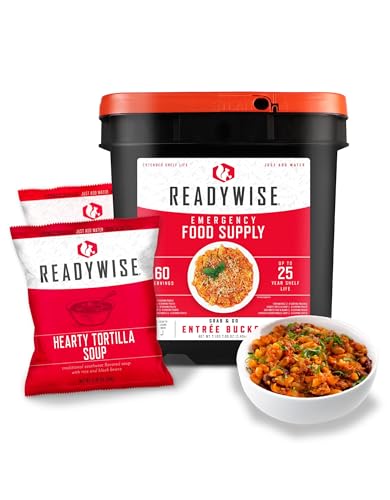
1. ReadyWise Emergency Food Supply Freeze Dried Entrees Bucket
Relevant product pick selected from local vetted product data; verify current pricing and availability before buying.
2. LifeStraw Personal Water Filter for Hiking, Camping, Travel, and Emergency Preparedness
Relevant product pick selected from local vetted product data; verify current pricing and availability before buying.

3. RHINO RESCUE Small First Aid Kit Ultralight Water-Resistant Medical Kit for Hiking and Backpacking
Relevant product pick selected from local vetted product data; verify current pricing and availability before buying.


