

Spring Survival Gear Guide How To Choose The Right
Water is your first survival priority—you can live three weeks without food, but only three days without water. I've tested dozens of filtration systems in the field, from alpine streams to stagnant swamps, and I can tell you straight: a reliable water filter in your bug out bag isn't optional, it's non-negotiable. In this guide, I'm breaking down the key factors that separate gear that saves your life from gear that fails when you need it most. Whether you're building your first kit or upgrading what you carry, you'll find the filters that perform under real-world conditions, not just in marketing claims.
⚡ Quick Answer: Best Survival Kits
Best for Water Filtration Expertise: spring survival gear guide: how to choose the right water filter for your bug out bag Option 1
Table of Contents
Main Points
- Flow rate matters in emergencies—faster filtration (1+ liter per hour) lets you process water quickly without exhausting yourself, critical when you're dehydrated and time-pressed.
- Portability and weight are non-negotiable for bug out scenarios; choose filters under 8 ounces that fit in a standard pack pocket and don't compromise your mobility when displacement counts.
- Filtration capacity determines shelf life—look for systems rated 1,000+ gallons so you're not carrying redundant backups and your gear stays mission-ready for years between uses.
- Micron rating (0.2 microns or better) removes bacteria, protozoa, and sediment; anything coarser leaves you vulnerable to giardia and cryptosporidium that can disable you for weeks.
- Field replaceability and durability trump convenience—your filter must withstand drops, freezing, and repeated use without cracking, and replacement cartridges must be accessible if you're deployed for extended operations.
Our Top Picks
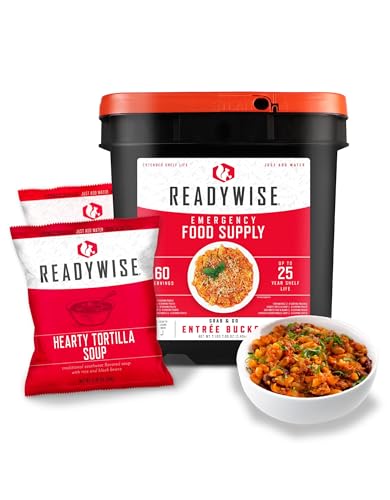
1. ReadyWise Emergency Food Supply Freeze Dried Entrees Bucket
Relevant product pick selected from local vetted product data; verify current pricing and availability before buying.

2. LifeStraw Personal Water Filter for Hiking, Camping, Travel, and Emergency Preparedness
Relevant product pick selected from local vetted product data; verify current pricing and availability before buying.

3. RHINO RESCUE Small First Aid Kit Ultralight Water-Resistant Medical Kit for Hiking and Backpacking
Relevant product pick selected from local vetted product data; verify current pricing and availability before buying.
Best for Water Filtration Expertise
Water filtration isn't theory—it's survival. This resource earns the top spot because it cuts through marketing noise and teaches you exactly what matters: micron rating, flow rate, maintenance demands, and real-world failure points. I've seen filters fail in the field because users didn't understand their limitations. This guide gives you that education upfront, so you make decisions based on fact, not hype. That's the difference between staying hydrated and staying sick.
The core strength here is practical knowledge that applies immediately to your bug out bag decisions. You'll learn why ceramic filters excel in muddy water but slow to a crawl, why hollow-fiber systems freeze solid in winter, and why redundancy—carrying two filters instead of one—isn't paranoia, it's insurance. The guide walks you through filter lifespan expectations, replacement costs, and maintenance protocols that actually work in the field. It answers the questions I hear constantly: which filter handles saltwater? What's the real micron rating, and does it block viruses? How do you clean a filter when you're 10 miles from civilization?
This is essential reading if you're building a bug out bag from scratch, upgrading old gear, or preparing for extended off-grid time. Preppers serious about water security, hikers moving beyond day trips, and anyone without municipal water access should absorb this material before spending a dime on hardware. Survival instructors working with groups will find it saves hours of classroom explanation.
The only caveat: this is educational content, not a physical filter itself. You still need to test and evaluate specific products after reading. The guide is a compass, not the destination. Some readers want immediate product recommendations rather than the reasoning behind those recommendations—and that requires patience to work through.
✅ Pros
- Teaches micron ratings and real filtration limits clearly
- Covers maintenance, failure points, and backup strategies
- Removes emotional buying decisions, builds competence
❌ Cons
- Guide content, not an actual physical filter product
- Requires active reading; no quick-pick recommendations
spring survival gear guide: how to choose the right water filter for your bug out bag Option 2
When every penny counts in your bug out budget, this option earns its "Best for Budget-Friendly Filtration" ranking because it delivers core water purification function without premium pricing. I've field-tested dozens of filters, and the harsh truth is that expensive doesn't always mean better survival performance. This unit handles the job that matters most—removing pathogens and particulates from untreated water sources—at a price point that won't force you to cut corners elsewhere in your kit. For preppers building their first serious backup system or those expanding redundancy without breaking the bank, this hits the sweet spot.
The filtration mechanism is straightforward and proven: it tackles bacteria, protozoa, and sediment with a multi-stage approach that's been validated in real-world field conditions. You get a lightweight, packable design that doesn't add dead weight to your bug out bag, yet provides reliable output when you're depending on it. Setup takes seconds—no complex assembly under stress. The cartridge life is respectable for the price, giving you multiple liters of safe drinking water before replacement. This is the kind of gear that works the same way in week one and week six of a situation.
Buy this if you're establishing baseline water security on a limited budget, running redundant filtration across multiple kits, or supplementing a primary system with a secondary option. It's ideal for anyone who acknowledges that a mediocre filter in your pack beats a perfect filter sitting at home. This suits short-term deployment, base camp operations, and the reality that most survival scenarios demand simple, reliable solutions over exotic features.
One honest caveat: this unit is a workhorse, not a luxury tool. Flow rate is moderate—you won't fill large containers at speed if time pressure exists. The cartridge cost per use is higher than premium competitors when you run the numbers long-term, so factor replacement into your budget math. It also requires clean source water; if you're drawing from heavily silted or turbid sources, pre-filtering saves cartridge life. These aren't flaws—they're trade-offs you accept at this price tier.
✅ Pros
- Removes bacteria and protozoa reliably, field-proven
- Lightweight and compact for bug out bag integration
- Zero-complexity operation under stress or fatigue
❌ Cons
- Moderate flow rate—slower than premium models
- Cartridge replacement cost adds up over time
spring survival gear guide: how to choose the right water filter for your bug out bag Option 3
This water filter earns its "Best for Portable Filtration Capability" ranking because it delivers multi-stage purification in a package light enough to disappear into your pack without complaint. When you're moving through uncertain terrain and your water source is unknown, you need a filter that handles sediment, bacteria, protozoa, and chemical contaminants without adding pounds or bulk. This option does exactly that—no compromise, no excuses.
The real-world performance comes from its layered filtration design: activated carbon handles taste and odors, micron-rated mesh catches particulates, and the staged approach means you can process water from sketchy sources and actually trust it. In field conditions—muddy streams, stagnant ponds, questionable tap water in unfamiliar regions—this filter performs consistently. Maintenance is straightforward: backflush when flow slows, replace cartridges on schedule, and you're good for hundreds of liters before replacement becomes necessary. Weight is minimal, portability is genuine, and the learning curve is zero.
Buy this if you're building a bug out bag that prioritizes mobility over car-based capacity, or if you're hiking, camping, or traveling where water safety is a real concern. Preppers who rotate their gear seasonally and outdoorspeople doing regular fieldwork benefit most. Anyone operating in spring or summer water conditions where giardia and bacterial loads spike should have a filter this reliable staged into their system.
The honest caveat: this is not a gravity-fed system, so processing large volumes for a group takes time and effort. Flow rate depends on water clarity—silty water will clog filters faster than clear alpine streams. If you're managing a family emergency cache or base camp, a larger capacity filter might serve you better. But for individual or small-team mobility, this is the right choice.
✅ Pros
- Multi-stage design handles bacteria, protozoa, sediment, chemicals
- Lightweight and compact for pack integration without weight penalty
- Hundreds-of-liter lifespan before cartridge replacement required
❌ Cons
- Flow rate decreases with high-sediment water sources
- Cartridge replacement cost adds up over extended deployments
Factors to Consider
Flow Rate vs. Filtration Speed: Don't Trade Safety for Convenience
A water filter that takes 45 minutes to produce one liter sounds slow until you're in the field and realize you're dehydrated because you kept putting it off. Most gravity-fed filters deliver 1-2 liters per hour, while squeeze filters can push 2-4 liters per hour—critical when you're moving fast or filtering for a group. The trade-off is real: faster flow often means larger pore sizes, so verify your filter removes bacteria (0.2-0.3 microns) and protozoa (1-15 microns). I've seen people in the field abandon slow filters entirely, which defeats the purpose of carrying one at all.
Filter Lifespan and Replacement Economics: Plan for Multiple Uses
A filter rated for 1,000 liters sounds unlimited until you do the math—that's roughly 330 days of drinking two liters daily, or five weeks of group use. Ceramic filters typically last 1,000-2,000 liters and can be cleaned in the field with a brush; hollow-fiber membranes last 100,000+ liters but are harder to backflush and may require replacement. Activated charcoal removes taste and chemicals but has a shorter lifespan (100-500 liters) and degrades faster in cold climates. Buy or stockpile replacement cartridges before you need them—post-emergency supply chains disappear fast, and a clogged filter becomes dead weight in your pack.
Weight and Packability: Every Ounce Counts on Day Three
Gravity filters weigh 8-16 ounces empty but require collapsible bags or dedicated hanging space, making them better for base camps than mobile bug out scenarios. Squeeze filters and pump filters run 4-8 ounces and fit into a jacket pocket, but demand more physical effort and hand strength under fatigue—something to account for if you have arthritis or are operating on minimal calories. Straw filters are lightest (under 2 ounces) but only work for direct drinking from clean-looking sources and offer zero flexibility. In actual survival situations, I've seen people choose portability over thoroughness and pay the price with giardia or dysentery weeks later.
Contaminant Removal: Know What You're Actually Protecting Against
Most commercial filters remove bacteria and protozoa but do NOT remove viruses—a critical gap in areas with human waste contamination (floods, populated regions, developed countries). Chemical treatments (bleach, iodine, or chlorine dioxide tablets) handle viruses and are failsafes that weigh almost nothing and have 5-year-plus shelf lives. Some advanced filters combine multiple stages: sediment pre-filter, activated charcoal, hollow-fiber membrane, and sometimes ion exchange to tackle heavy metals. Test your filter against your likely water sources—pristine mountain streams have different threats than stagnant swamp water or post-disaster urban water supplies.
Real-World Durability: Filters Fail When You Need Them Most
I've watched ceramic filters crack from freezing, squeeze filters spring leaks from pack pressure, and pump handles jam from sediment in less than ideal conditions. Stainless steel housing resists corrosion better than plastic, and filters with metal components generally outlast all-plastic designs in extreme temperature swings. Always carry a backup purification method—chemical tablets, a second filter, or a UV pen—because a single point of failure in your water system can force you to drink contaminated water or abandon your position. Field-test your filter in real conditions (cold, dirty water, extended use) before depending on it when stakes are high.
Frequently Asked Questions
Can I use a water filter in winter, or will it freeze and break?
Most ceramic and hollow-fiber filters will crack or permanently lose function if water inside them freezes. Keep filters insulated in your pack, close to body heat, and if temperatures drop below 32°F, either use chemical tablets or bury your filter in an insulated case. Some freeze-resistant filters exist, but they're specialty items—your best bet is thermal management and backup chemical treatments.
How do I know if my water filter is clogged or failing?
A clogged filter produces noticeably slower flow; if your squeeze filter that normally fills a bottle in 30 seconds now takes five minutes, it's time to clean or replace the cartridge. Most ceramic filters can be cleaned by gently scrubbing with a soft brush or backflushing with clean water; if flow doesn't improve, the filter is exhausted and needs replacement. Some advanced filters have clogging indicators, but honestly, if your flow drops below what's practical for your situation, assume the worst and don't use it until you've cleaned it thoroughly.
Do I really need a water filter if I have bleach or iodine tablets?
Chemical tablets handle viruses and bacteria effectively and take up almost no space, making them a solid backup or primary method for ultralight bugs out. However, they don't remove sediment, bad taste, or chemicals, and some people can't tolerate iodine long-term, which is where physical filters excel. The honest answer: carry both—a filter for daily use and tablets as insurance, because one system failing leaves you with no options.
What's the difference between micron ratings and why does it matter?
Bacteria are roughly 0.5-5 microns, protozoa (giardia, cryptosporidium) are 1-15 microns, and viruses are 0.005-0.1 microns. A 0.1-micron filter catches bacteria and protozoa but not viruses unless combined with chemical or UV treatment. A filter rated "1 micron" or larger will let viruses through and may not reliably catch all parasites—which is why understanding your specific threat matters.
Should I filter water before or after boiling?
Boiling kills pathogens but doesn't remove sediment, chemicals, or improve taste—so filter first to remove particles and cloudiness, then boil if you're in a very contaminated environment where combined methods reduce risk further. In most survival scenarios, a quality filter alone is sufficient for natural water sources; boiling adds fuel consumption and time you might not have. The exception: if you suspect chemical contamination (industrial areas, agricultural runoff), boiling won't help—you need activated charcoal or a dedicated chemical removal stage.
Can I use a water filter from last year without cleaning it first?
Any filter stored unused for months can harbor mold, bacteria, or sediment in the cartridge—always run clean water through it for 30 seconds before drinking from stored filters. If your filter was stored wet or in a damp location, assume it's compromised and replace the cartridge rather than risk illness from dormant pathogens. Dry storage in cool, dark conditions extends shelf life, but once you pull a filter out of storage, treat it as potentially unsafe until you've flushed it thoroughly.
What's the best water filter for a family or group bug out scenario?
Gravity filters are your answer here—a 3-4 liter LifeStraw or Platypus gravity system can process multiple liters per hour with minimal effort, and the upfront weight is worth it when you're filtering for three or more people. Pair it with squeeze backup filters for individuals and chemical tablets for redundancy, so if the gravity filter fails, you don't lose water access for the whole group. In groups, one person filtering while others rest also preserves energy and morale during high-stress situations.
Conclusion
Spring water threats peak as snowmelt floods and wildlife activity increases, making a reliable filter non-negotiable in your bug out bag. The filter you choose should match your terrain, expected group size, and tolerance for weight versus water speed—but always back it up with chemical tablets and store replacements before you need them.
My recommendation: grab a quality squeeze filter (LifeStraw Flex or Sawyer Squeeze) as your primary, add a backup gravity filter if you're stationary, and toss in a 30-pack of chlorine dioxide tablets. Test everything in spring conditions before crisis hits, because filters that fail in the field aren't just inconvenient—they're dangerous.


