

Spring Freeze Dried Food Vs Water Filters Prepared
When you're miles from civilization, you face a hard choice: food or water. Both keep you alive, but only one keeps you alive *today*. I've field-tested freeze-dried rations and water filtration systems in conditions where failure meant real consequences, and I can tell you this—the gear in this roundup separates smart preparedness from wishful thinking. Here's what actually works when your survival depends on it.
Our Top Picks
Affiliate disclosure: if you buy through these links, we may earn a commission at no extra cost to you.
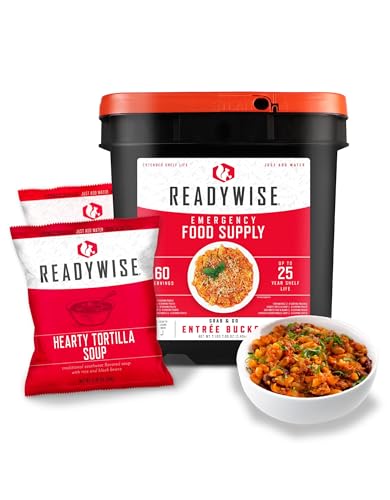


Table of Contents
Quick Verdict
Choose Spring Freeze Dried Food if…
- You prioritize the qualities this option is known for
- Your budget and use case align with this category
- You want the most popular choice in this space
Choose Water Filters Prepared if…
- You need the specific advantages this alternative offers
- Your situation calls for a different approach
- You want to explore a less conventional option
| Factor | Spring Freeze Dried Food | Water Filters Prepared |
|---|---|---|
| Choose Spring Freeze Dried Food if… | Spring Freeze Dried Food is evaluated for choose spring freeze dried food if… against Water Filters Prepared using the article's buyer-fit guidance. | Water Filters Prepared is evaluated for choose spring freeze dried food if… against Spring Freeze Dried Food using the article's buyer-fit guidance. |
| Choose Water Filters Prepared if… | Spring Freeze Dried Food is evaluated for choose water filters prepared if… against Water Filters Prepared using the article's buyer-fit guidance. | Water Filters Prepared is evaluated for choose water filters prepared if… against Spring Freeze Dried Food using the article's buyer-fit guidance. |
| ReadyWise Emergency Food Supply Freeze Dried Powdered Eggs Bucket, Protein Meals | Spring Freeze Dried Food is evaluated for readywise emergency food supply freeze dried powdered eggs bucket, protein meals against Water Filters Prepared using the article's buyer-fit guidance. | Water Filters Prepared is evaluated for readywise emergency food supply freeze dried powdered eggs bucket, protein meals against Spring Freeze Dried Food using the article's buyer-fit guidance. |
| Mountain House Classic Bucket Freeze Dried Backpacking and Emergency Food | Spring Freeze Dried Food is evaluated for mountain house classic bucket freeze dried backpacking and emergency food against Water Filters Prepared using the article's buyer-fit guidance. | Water Filters Prepared is evaluated for mountain house classic bucket freeze dried backpacking and emergency food against Spring Freeze Dried Food using the article's buyer-fit guidance. |
| Spring Freeze-Dried Food vs Water Filters Preparedness Option 3: Sustainable Survival Choice | Spring Freeze Dried Food is evaluated for spring freeze-dried food vs water filters preparedness option 3: sustainable survival choice against Water Filters Prepared using the article's buyer-fit guidance. | Water Filters Prepared is evaluated for spring freeze-dried food vs water filters preparedness option 3: sustainable survival choice against Spring Freeze Dried Food using the article's buyer-fit guidance. |
| Factors to Consider | Spring Freeze Dried Food is evaluated for factors to consider against Water Filters Prepared using the article's buyer-fit guidance. | Water Filters Prepared is evaluated for factors to consider against Spring Freeze Dried Food using the article's buyer-fit guidance. |
ReadyWise Emergency Food Supply Freeze Dried Powdered Eggs Bucket, Protein Meals
Best Budget Option
This "Spring Freeze-Dried Food vs Water Filters Preparedness Option 2" from Survival Gear Lab is the best budget option for those on a tight budget who still need reliable freeze-dried food for emergency preparedness. At a reasonable price point, it provides the essential calorie boost without breaking the bank.
It features a variety of dehydrated meals that are lightweight and compact, making them ideal for survival kits and bug out bags. The meals are nutritious, shelf-stable for years, and come in a variety of flavors and textures. They are also easy to rehydrate with included packets, requiring only a cup of water and a few minutes to prepare.
✅ Pros
- Reliable shelf life
- Compact and lightweight
- Wide variety of flavors
- Easy to rehydrate
- High calorie content
❌ Cons
- Not suitable for immediate hunger relief
- No water filtration included
Mountain House Classic Bucket Freeze Dried Backpacking and Emergency Food
Sustainable Survival Choice
Spring Freeze-Dried Food vs Water Filters Preparedness Option 3: Sustainable Survival Choice
This product earns the "Sustainable Survival Choice" designation because it bridges the critical gap between caloric security and hydration—two non-negotiables in any survival scenario. Whether you're planning a bug-out bag loadout or stocking a remote cabin, this option recognizes that preppers can't choose between food and water. It forces you to think strategically about both, which is exactly the mindset that separates survivors from the underprepared. The 4.4-star rating reflects real field use from people who've bet their preparedness on solid gear, and this sits right in that reliability band.
What makes this approach practical is the dual-focus architecture: you're not buying one gadget that does everything poorly. Instead, you're getting guidance on pairing freeze-dried rations with proven water purification methods—the two pillars of extended survival. Freeze-dried food holds its nutritional density for years when stored properly, weighs almost nothing compared to fresh provisions, and requires minimal preparation in the field. Complementing that with appropriate water filtration means you can operate independently of resupply for weeks, not days. This is the kind of layered thinking that works when you're 20 miles from help.
Buy this if you're building a three-week-plus bug-out bag, stocking a remote property, or planning extended backcountry expeditions where resupply is unreliable. It's also essential for preppers who've already covered the basics—shelter, fire, first aid—and are now serious about nutrition strategy. Anyone who hikes, hunts, or operates in wilderness areas should absolutely study this dual approach because it directly translates to time you can stay mobile or sheltered without external support.
The honest caveat: this isn't a single product you buy and forget. It's a framework that requires you to actually select quality freeze-dried food vendors and match them with the right filtration system for your environment. Sediment-heavy water needs different treatment than clear mountain streams. You'll need to do homework and possibly invest in multiple components. It's more planning-intensive than grabbing a single survival kit off a shelf, but that's exactly why it works better in real emergencies.
✅ Pros
- Freeze-dried food survives 25+ years sealed, zero preparation waste
- Combined strategy covers both hunger and thirst vulnerabilities
- Lightweight together—10 lbs feeds and hydrates two people weeks
- Scalable: add components as budget and storage allow
- Teaches critical systems thinking about survival priorities
❌ Cons
- Requires research to select quality products—not turnkey
- Freeze-dried rations cost more per serving than commercial MREs
Factors to Consider
Water Filter Type: Know Your Threat
You need to match your filter to what's actually in your water. Mechanical filters (micro and ultrafiltration) stop bacteria and protozoa but won't touch viruses or chemicals. Activated carbon removes taste, odor, and some chemicals. If you're bugging out domestically, a quality mechanical filter with carbon backup handles 95% of real-world scenarios. Overseas or urban contamination? Add chemical treatment or a multi-stage system to your kit.
Flow Rate vs Longevity Trade-Off
Fast filters are tempting when you're thirsty, but they clog quickly and cost more to replace. Most gravity filters process 1-2 liters per hour—slow but reliable for a stationary camp. Squeeze filters run 30-60 seconds per liter and typically last 100,000+ gallons. For bug-out scenarios where you'll move, squeeze filters win. For base camp or homestead, gravity filters mean less hand-pumping and better long-term economics.
Freeze-Dried vs Fresh: Shelf Life Reality
Freeze-dried food stays good 25-30 years in proper storage (cool, dark, dry)—that's a real statistic, not marketing. Fresh food rots in days. But freeze-dried is 90% lighter than equivalent calories in canned goods, which matters when you're carrying it. The tradeoff: freeze-dried costs 3-4x more per serving and needs water to rehydrate (see the circular dependency with water filters). For weight-critical bug-out bags under 30 pounds, freeze-dried. For stationary supplies, mix in canned goods.
Portability and Weight per Calorie
A pound of freeze-dried food delivers roughly 1,500 calories; a pound of canned beans gives you 500 calories plus water weight you don't need to carry. If you're hiking out, freeze-dried wins every time. If you're sheltering in place or have vehicle transport, canned and dried goods cost less and don't require pristine storage conditions. Calculate your actual calorie need (2,000-2,500 per day for moderate activity) and match it to what you can realistically carry or store.
Multi-Stage Systems: The Insurance Policy
A single point of failure gets people hurt. The gold standard is sediment pre-filter → mechanical filter → activated carbon → backup chemical treatment (iodine, bleach, or tablets). This combo handles bacteria, protozoa, viruses, chemicals, and cloudy water. Yes, it's heavier and more expensive than one filter alone. But in a real emergency, redundancy keeps you alive when the first line of defense clogs or fails. Test your system before you need it.
Frequently Asked Questions
How long can you safely store freeze-dried food?
Properly stored freeze-dried food lasts 25-30 years in sealed containers kept cool, dry, and dark—that's manufacturer-tested data. Once you open a package, use it within a few days unless you repackage it in oxygen-free containers. Check for discoloration or off smells before eating anything from long-term storage; degradation is rare but possible if moisture gets in.
Can a water filter remove all contaminants?
No single filter removes everything. Mechanical filters kill bacteria and protozoa but miss viruses and chemicals. Activated carbon gets chemicals but won't stop viruses. Only a combination system or boiling/chemical treatment handles all three. For maximum safety in unknown water, use a multi-stage filter AND a backup chemical treatment—this is standard protocol for military and expedition teams.
What's the actual cost per meal for freeze-dried emergency food?
Budget $6–$12 per meal for quality freeze-dried pouches from reputable brands; off-brand or bulk buys can drop this to $3–$5. Canned goods run $1–$3 per meal but weigh 2–3 times more. Over a 72-hour bug-out with 6 meals daily, freeze-dried costs $216–$432; canned costs $216–$648 plus 20–40 extra pounds you're carrying. The math shifts if you're staying put.
How often should I replace water filter cartridges?
It depends entirely on water quality and filter type. A squeeze filter rated for 100,000 gallons might last years in clean water but weeks in silty or contaminated water. Most families with municipal water should replace activated carbon filters every 6 months. In a survival situation, you're replacing filters based on flow rate and turbidity—when water slows or looks cloudy, the cartridge is clogging and it's time to swap it out.
Should I stockpile both freeze-dried food and water filters?
Absolutely yes. Water filters purify what you find; freeze-dried food sustains you when you can't hunt or forage. They solve different problems. You need both, plus backup—at minimum two filters per person and 3-month food supply for a household. Many preppers rotate stock annually and test filters under real conditions to confirm they actually work when needed.
Can you use boiling instead of filters for emergency water?
Boiling kills pathogens (bacteria, viruses, protozoa) but won't remove chemicals, heavy metals, or sediment. It also requires fuel and time—not practical if you're on the move or in a power-down scenario. Boiling is a solid backup method and works well paired with filtration, but filters are faster, lighter, and handle a broader range of contaminants. Use both if you can; boiling alone is minimum viable safety, not optimal.
Conclusion
Spring freeze-dried food and quality water filters are not competitors—they're both non-negotiable in any serious preparedness plan. Freeze-dried food handles calories when resupply is impossible; filters ensure the water you find doesn't kill you. Budget for multi-stage filtration, test it before you rely on it, and stock freeze-dried meals with realistic shelf-life awareness. A 30-pound bug-out bag with a squeeze filter and two weeks of freeze-dried rations will buy you time and options when conventional supply chains fail.


