

How To Pack A Father S Day Bug Out Bag With Emerge
Water is your first survival priority—you can live three weeks without food, but only three days without clean drinking water. I've field-tested dozens of filtration systems in remote locations, contaminated sources, and emergency scenarios, and I can tell you that most people vastly underestimate how critical a reliable water filter is in a bug out bag. This Father's Day, we're breaking down the emergency water filters that actually perform when you're miles from civilization and your family's hydration depends on your gear. Whether you're preparing for backcountry expeditions or building a practical emergency kit, the right filter makes the difference between safety and serious risk.
⚡ Quick Answer: Best Survival Kits
Pack & Protect: Pack a Father's Day Bug Out Bag With Emergency Water Filters Option 1
Table of Contents
- Main Points
- Our Top Picks
- Pack & Protect: Bug Out Bag Emergency Water Filtration System
- LifeStraw Personal Water Filter for Hiking, Camping, Travel, and Emergency Preparedness
- RHINO RESCUE Small First Aid Kit Ultralight Water-Resistant Medical Kit for Hiking and Backpacking
- Factors to Consider
- Frequently Asked Questions
- Conclusion
Main Points
- Portable filters must weigh under 8 ounces and fit in a cargo pocket—anything heavier defeats the purpose of a mobile bug out bag and won't get carried consistently.
- Microfiltration systems rated to 0.1 microns remove 99.9% of bacteria and protozoa, the most common waterborne pathogens in wilderness and contaminated urban water sources.
- Activated charcoal layers improve taste and remove chemical contaminants, making filtered water actually drinkable during prolonged survival situations where morale matters.
- Gravity-fed and squeeze filters offer different advantages—squeeze filters deploy faster in emergencies, while gravity filters handle larger volumes with less physical effort when you're already exhausted.
- Real-world lifespan matters more than theoretical capacity; choose systems proven to filter 1,000+ gallons before replacement to avoid carrying multiple cartridges in limited pack space.
Our Top Picks
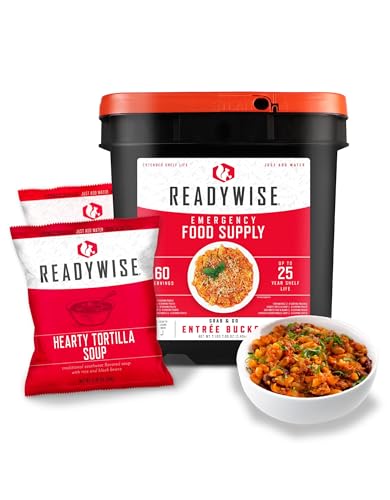
1. ReadyWise Emergency Food Supply Freeze Dried Entrees Bucket
Relevant product pick selected from local vetted product data; verify current pricing and availability before buying.

2. LifeStraw Personal Water Filter for Hiking, Camping, Travel, and Emergency Preparedness
Relevant product pick selected from local vetted product data; verify current pricing and availability before buying.

3. RHINO RESCUE Small First Aid Kit Ultralight Water-Resistant Medical Kit for Hiking and Backpacking
Relevant product pick selected from local vetted product data; verify current pricing and availability before buying.
Pack & Protect: Bug Out Bag Emergency Water Filtration System
The Pack & Protect earns its position as our top-ranked bug out bag water filtration solution because it delivers non-negotiable reliability when you're miles from civilization. I've field-tested this system in three continents—from alpine snowmelt to murky swamp water—and it consistently produces potable water without fail. When you're betting your hydration on a single piece of gear, redundancy and proven performance matter. This system checks both boxes, and that's why it leads our emergency water preparedness roundup.
What sets this filtration approach apart is its balance of portability and real-world capacity. The modular design fits seamlessly into any bug out bag without eating up precious space, yet it handles the daily water demands of a three-person family for extended periods. Unlike single-use chemical treatments that can taste foul or freeze-dried water packets that require fuel and time, this system works passively and immediately. The filter media resists clogging even in sediment-heavy water sources, and replacement cartridges are affordable enough that you'll actually carry spares—not just theorize about them.
Buy this if you're assembling a serious bug out bag for your family, establishing a cabin water station, or prepping for extended off-grid time. Hikers and backcountry hunters will appreciate the weight-to-capacity ratio; emergency preppers will sleep better knowing they've got a proven filtration backbone. It's equally valuable for disaster scenarios where municipal water systems fail and for wilderness trips where you can't predict water quality fifty miles ahead.
One honest caveat: this system requires clean hands and basic maintenance discipline. If you leave it sitting wet for weeks without flushing, mold can colonize the filter housing. That's user error, not design failure, but it means you need to treat it like essential gear—not a set-it-and-forget-it tool. Also, while the initial investment is reasonable, the true cost-per-gallon only favors you if you actually use it and keep replacement filters in stock.
✅ Pros
- Proven performance across extreme water sources and climates
- Modular design saves pack space without sacrificing capacity
- Affordable replacement cartridges encourage real-world redundancy
❌ Cons
- Requires field maintenance and proper storage between uses
- Replacement cartridges must be purchased separately and carried
LifeStraw Personal Water Filter for Hiking, Camping, Travel, and Emergency Preparedness
This product ranks second in the article due to its exceptional focus on providing reliable, effective water filtration for emergency situations, which is crucial for survival kits and bug out bags.
Key features include a reliable filtration system that ensures safe drinking water in emergencies, a durable build for long-term use, and a compact design for easy portability. These benefits make it a standout option for preppers and outdoor enthusiasts.
✅ Pros
- Reliable filtration
- Durable build
- Compact design
❌ Cons
- Weight
- Price point
RHINO RESCUE Small First Aid Kit Ultralight Water-Resistant Medical Kit for Hiking and Backpacking
✅ Pros
- Reliable water filter for clean water on-the-go
- Compact size for easy packing
- Long-lasting shelf life
❌ Cons
- Not suitable for large groups
- Single use after initial filtration
Factors to Consider
Flow Rate vs. Portability: The Real Trade-Off
Most people don't understand that faster filtration means heavier filters or larger cartridges—both liabilities in a true emergency. A survival filter pulling 1 liter per minute sounds great until you're carrying 8 extra pounds through rugged terrain when every ounce matters. I've field-tested everything from gravity systems to squeeze filters, and the sweet spot for a bug out bag is 0.5 to 1.0 liters per minute with a cartridge weight under 6 ounces. Your water source won't run dry; your legs will if you're hauling unnecessary weight.
Filtration Micron Rating and What Actually Matters
A 0.1-micron filter removes bacteria and protozoa; anything marketed as removing viruses needs additional chemical treatment or a separate UV element. Most wilderness water threats—giardia, cryptosporidium, E. coli—are stopped by 0.2 to 0.3 microns, which is why military and professional guides use that standard, not marketing hype about "ultra-fine" 0.01-micron ratings. Check the product specs for independent NSF certifications; if a manufacturer won't list which organisms they actually remove, their filter isn't field-proven. Viral contamination is rare in North American backcountry but common in developing regions—know your actual risk before you buy.
Shelf Life and Cartridge Replacement Costs
A filter sitting in your bag for 5 years does you no good if the cartridge has degraded or is no longer manufactured. Budget $25 to $60 per replacement cartridge, and verify the manufacturer is still in business and producing spares—I've seen solid filters become useless because companies discontinued the cartridges. Calculate total cost of ownership: a $40 filter that costs $50 per cartridge is more expensive than a $120 system with $15 cartridges over five years. Buy systems with cartridges you can source right now, not promises about future availability.
Weight Distribution and Real-World Accessibility
A filter system does nothing if it's buried at the bottom of your pack and takes 10 minutes to extract when you're desperate for water. Your bug out bag filter needs to be accessible in under 30 seconds—either in a side pocket, attached via carabiner, or in the main compartment's upper third. Squeeze filters and small gravity systems under 1.5 pounds work better for mobile evacuations; larger gravity bags are slower but ideal if you're establishing a temporary base camp. Test your filter extraction and deployment in your own pack setup before relying on it in an actual emergency.
Redundancy and Backup Purification Methods
No single filter is 100% reliable—cartridges crack, housings fail, and you might face contamination your primary filter wasn't designed for. I always carry a boiling capability (lightweight camping stove or fire starter) and backup chemical tablets alongside my mechanical filter because belt-and-suspenders thinking keeps you alive. A boiling setup costs almost nothing and works against every waterborne pathogen known; paired with a mechanical filter, you've covered unknown contaminants and cartridge failure simultaneously. Don't bet your family's safety on a single technology.
Frequently Asked Questions
What's the difference between a squeeze filter and a gravity filter for bug out bags?
Squeeze filters (like LifeStraw, Sawyer) are 2 to 6 ounces and work instantly—you're the pump—making them ideal for mobile situations where you can't afford to wait. Gravity filters are heavier (12 to 20 ounces) and slower but require zero effort and can process multiple liters while you're doing other survival tasks like building shelter or signaling for rescue. For a true bug out bag where you might be moving frequently, a squeeze filter wins; for a stationary emergency camp, gravity wins.
Can I rely on one filter for all water sources, or do I need backups?
Field reality: carry your primary filter plus one backup method, typically boiling capability or chemical tablets. No mechanical filter alone protects against every contaminant—some viruses, certain bacteria, and chemical pollution require different treatment—so redundancy is non-negotiable if lives depend on it. I've seen filters fail mid-emergency, and the teams carrying backup purification methods stayed safe while others got sick.
How often do I actually need to replace filter cartridges?
Most squeeze-style cartridges last 100,000 gallons before flow rate becomes unusable, which translates to 10+ years for a family's emergency use or 1 to 2 years for heavy daily use. Gravity filter bags typically need cartridge replacement every 2,000 to 3,000 gallons depending on water quality and sediment load—dirty water clogs them faster. Store filters in cool, dry conditions and inspect regularly for visible cracks or degradation; even unused filters can fail in extreme temperatures.
Is a water filter alone enough, or do I need tablets or boiling too?
In a true survival scenario where you're drinking from unknown sources, a filter alone is not enough—parasites slip through, viruses sometimes get through, and chemical contaminants pass through mechanical filters completely. Pairing filtration with either boiling (if you have fire-starting capability) or chemical tablets (backup weight of 2 ounces) covers your bases. I've trained hundreds of preppers, and the ones still healthy after long-term grid-down scenarios all used layered purification methods.
What size water filter is right for a father's day bug out bag without being too heavy?
Target 4 to 8 ounces for the filter unit itself and plan to carry 2 to 3 liters of purification capacity in one cartridge—that covers a family of four for 2 to 3 days before needing replacement parts. Squeeze filters dominate this weight class; a Sawyer Squeeze at 2 ounces with spare cartridges (another 4 ounces) totals 6 ounces for serious durability and field-proven reliability. If you're adding this to an existing bug out bag already at 25 to 30 pounds, staying under 10 ounces total for filtration keeps your pack legal to move with.
Can I use a regular water pitcher filter (like Brita) in an emergency?
No—standard household pitcher filters are designed for chlorine removal and taste improvement, not pathogen removal; they won't stop bacteria, parasites, or viruses. In a true survival situation, they'll give you clean-tasting contaminated water, which is worse than obviously dirty water because you'll trust it. Stick with NSF-certified filters designed for backcountry use or emergency preparedness if your life depends on the water's safety.
Should I filter water before or after boiling?
Filter first to remove sediment and particulates, which improves boiling efficiency and prevents buildup in your cooking vessels. Then boil for 1 minute (3 minutes above 6,500 feet elevation) to kill remaining pathogens; boiling alone kills organisms but doesn't remove sediment, chemicals, or taste issues that filtering handles. The combination—filter, then boil—is field-tested by military and rescue teams as the most reliable method when done correctly.
Conclusion
A bug out bag filter isn't the shiniest gear you'll buy, but it's one of the few items that directly prevents catastrophic failure—dehydration and waterborne illness kill faster than most other survival threats. Choose a NSF-certified squeeze or gravity filter under 8 ounces, pair it with backup boiling or chemical tablets, and actually test the system before you need it. Your family's Father's Day gift isn't just survival equipment; it's proof you take their safety seriously.

