

How To Build A 72 Hour Bug Out Bag For Spring Wild
A 72-hour bug out bag should weigh between 25–35 pounds when fully loaded—anything heavier and you'll burn calories you can't afford to lose, especially if you're moving on foot through rough terrain. The pack itself should have a hip belt that transfers weight to your pelvis rather than your shoulders; this is non-negotiable for sustained movement. Look for packs with internal frame designs and padded lumbar support, and always load heavier items (water, first aid, tools) low and close to your back. Test the loaded pack on a 3–5 mile hike before you depend on it—comfort in your living room means nothing when you're moving through the field.
Table of Contents
Our Top Picks
Affiliate disclosure: if you buy through these links, we may earn a commission at no extra cost to you.
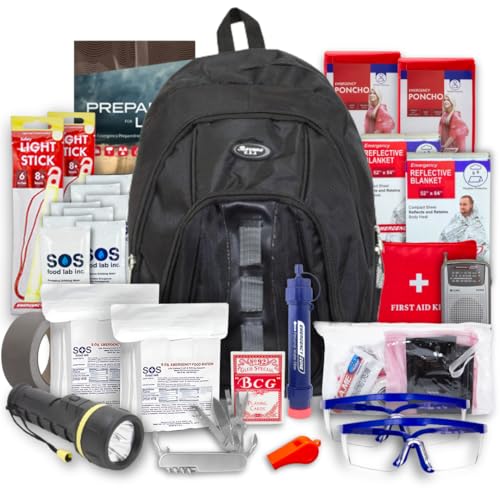
Emergency Zone Essentials 72-Hour Survival Kit - 2 Person Bug Out Bag Backpack
Check PriceCheck Price

Factors to Consider
Pack Weight and Load Distribution
Water Capacity and Filtration Strategy
You need to carry 2–3 liters of water storage capacity in your pack, but relying only on what you carry is a losing strategy over 72 hours. A lightweight gravity filter or squeeze filter takes up minimal space and lets you source water from streams, ponds, or collected rainwater—this is mission-critical for spring evacuations when water sources are plentiful but unpredictable. Avoid heavy ceramic filters for a bug out bag; instead, choose hollow-fiber or activated charcoal systems that weigh under 4 ounces and don't require replacement parts you can't resupply in the field. Always carry backup purification tablets as a secondary layer—boiling isn't always an option when you're moving.
Food Caloric Density and Shelf Life
Freeze-dried meals and energy-dense foods like nuts, jerky, and energy bars should make up your food stores—aim for a minimum of 2,400 calories per day, though 3,000 is better if you're hiking under load in cool weather. Freeze-dried food has a shelf life of 15–25 years if stored in cool, dry conditions, and rehydrates quickly with minimal fuel consumption. Skip the heavy canned goods and full MREs for a 72-hour bag; instead pack calorie-dense items that weigh less than 1 pound per 1,000 calories. Test your food choices during training hikes so you know what actually sits well in your stomach under stress—gut issues in the field are force multipliers for everything else that goes wrong.
Fire-Starting Reliability and Redundancy
Carry at least three independent fire-starting methods: waterproof matches, a butane lighter, and a ferrocerium rod—if one fails, you have backups, and in wet spring conditions this redundancy isn't paranoia, it's standard practice. Ferrocerium rods work when wet and have effectively unlimited shelf life, making them ideal for long-term storage; butane lighters are compact and fast but can fail in cold weather below 32°F. Store all fire starters in a waterproof container separate from your main pack in case you lose gear; I've seen people abandon packs and need to rebuild fire with whatever they grabbed in a panic. Practice starting a fire with each method in damp conditions before you're forced to do it under real stress.
First Aid Depth vs. Pack Space
A 72-hour bag first aid kit doesn't need to be a full trauma kit—focus on blister prevention (moleskin, athletic tape), wound closure (butterfly bandages, medical tape), pain management (ibuprofen, acetaminophen), and bleed control (gauze, tourniquet basics). Include any personal medications (EpiPen, asthma inhaler, prescription pain meds) plus tweezers, safety pins, and antibiotic ointment; this whole kit should fit in a 6x4-inch ziplock and weigh under 1 pound. Blisters disable people faster than injuries in a bug out scenario—they force you to stop, they compound over 72 hours, and they're easily preventable. Don't pack items you won't use; a 10-pound first aid kit is dead weight that could be water, food, or shelter material instead.
Frequently Asked Questions
What's the difference between a bug out bag and a regular hiking pack?
A bug out bag is stripped down for speed and reliability under worst-case conditions—it prioritizes self-sufficiency, redundancy, and items that work without external infrastructure. A hiking pack assumes trailheads, marked routes, and the ability to turn back; a bug out bag assumes you might be moving through unknown terrain, in the dark, with no resupply, and possibly under time pressure. Your bug out bag should work solo in the wilderness for 72 hours with zero outside help.
How much water should I actually carry versus filter?
Carry 2–3 liters of treated water in bottles or a hydration reservoir, but plan to filter from natural sources for the remaining 60–70% of your water needs—this balances weight against safety and the reality that spring water sources are abundant in most evacuation scenarios. Never start a journey relying only on bottled water; you'll run out before you reach safety. A lightweight filter system is the only way to safely access stream water, rainwater, or collected sources without carrying 50 pounds of water.
Can I use regular camping food in a bug out bag, or do I need freeze-dried?
Freeze-dried is significantly lighter and requires minimal fuel to rehydrate, both critical advantages when you're moving under load and don't know your next resupply point. Regular camping food like canned goods and full-size MREs work fine for car camping but they'll sink a bug out bag fast—a single can of beans (15 oz) weighs as much as three freeze-dried meals worth 1,200 calories. If budget is tight, start with energy bars, nuts, and jerky; add freeze-dried meals as you expand your kit.
Should my bug out bag be hidden at home or with me all the time?
Keep your primary bag at home in an accessible location—closet, garage, under the bed—somewhere you can grab it in under 60 seconds if evacuation happens. A smaller 24-hour backup bag in your car is excellent insurance for commute-based emergencies when you can't get home. The bag you carry on you every day will evolve into an EDC (every day carry) kit; don't confuse that with your full 72-hour bag, which is designed to be grabbed and moved when time is critical.
What knife or cutting tool is actually essential in a bug out bag?
One fixed-blade knife (4–6 inches) with a full tang is the only cutting tool you need—avoid folding knives and multi-tools for a bug out bag because joints fail under real field stress, and you can't repair them. A good survival knife should process wood (batoning), clean game, prepare shelter material, and do fine detail work; if it can't do all four, it's a compromise tool. Practice your knife skills regularly with the exact blade you're carrying so you know its limits before you're forced to depend on it.
Is a two-way radio or personal locator beacon worth including?
A lightweight emergency radio (weather alert, two-way capability) is worth 6–8 ounces if it lets you receive evacuation updates and communicate with family or rescue—modern hiking radios like FRS units work in spring terrain and have realistic range. A personal locator beacon (PLB) is heavier and costs more but gives you hard rescue capability if you're injured and immobile; the trade-off depends on whether you expect terrain where self-rescue is impossible. For most spring bug out scenarios where you're moving and evacuating under your own power, a radio is more practical than a PLB; if you're planning to shelter in place in deep wilderness, a PLB justifies its weight.
Conclusion
A 72-hour bug out bag isn't insurance against panic—it's a tool for moving under control when circumstances force you to leave. Test every component in the field before you trust it with your survival, keep the pack weight honest, and maintain redundancy in water, fire, and shelter systems because the one item you didn't include will be the one you need.
Start with the core systems outlined here, rotate your food annually, check your gear twice a year, and build this bag incrementally as your budget allows rather than buying everything at once and never touching it again. A bag that stays packed and untested is just dead weight in your closet—a bag you've field-tested and modified is a tool that works when it counts.


